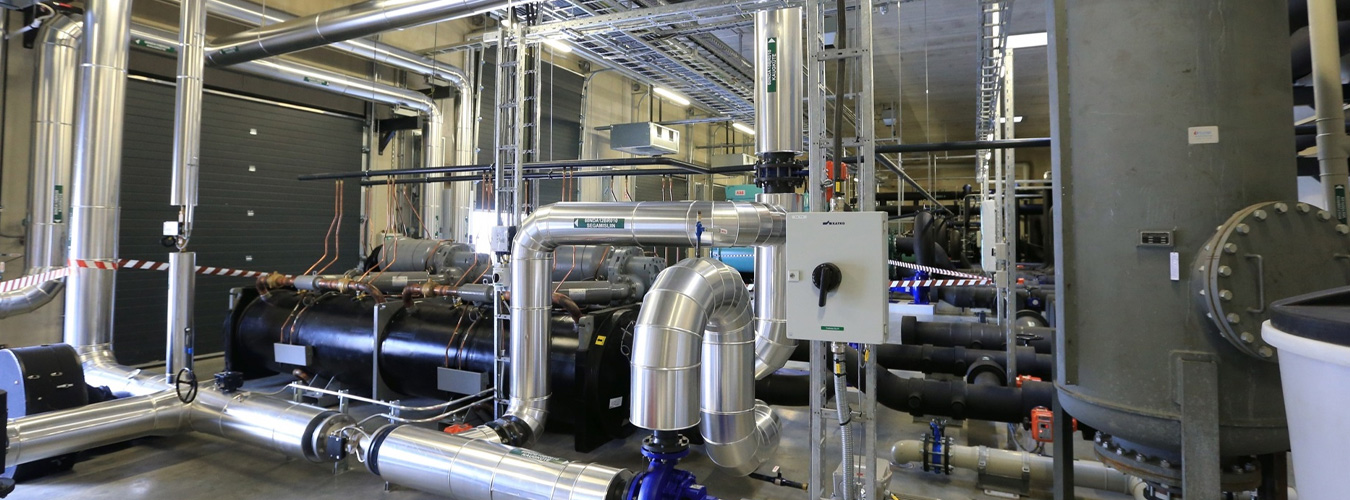
District Cooling Network Contractor in UAE
District cooling systems are essential infrastructure for large-scale developments across the UAE, delivering reliable and efficient cooling from central plants to entire communities, commercial districts, and industrial zones. A critical component of these systems is the distribution network, a series of pre-insulated pipelines that transport chilled water to individual buildings. A specialized district cooling network contractor is vital for the successful design, installation, and commissioning of these complex pipeline networks. Proper engineering and execution ensure minimal thermal loss, stable hydraulic performance, and long-term system reliability, directly impacting the operational efficiency of the entire cooling plant. Abdul Razzaq Technical Services LLC has been a trusted partner for district cooling infrastructure projects across the UAE since 2007. The team works closely with master developers, main contractors, and utility providers, including Empower, Tabreed, and Marafi,q to deliver chilled water distribution networks that meet the stringent standards of the region's top authorities.
Why Abdul Razzaq Technical Services LLC
● UAE Since 2007: Over 18 years of continuous operation. Deep understanding of district cooling provider requirements and utility corridor approvals.
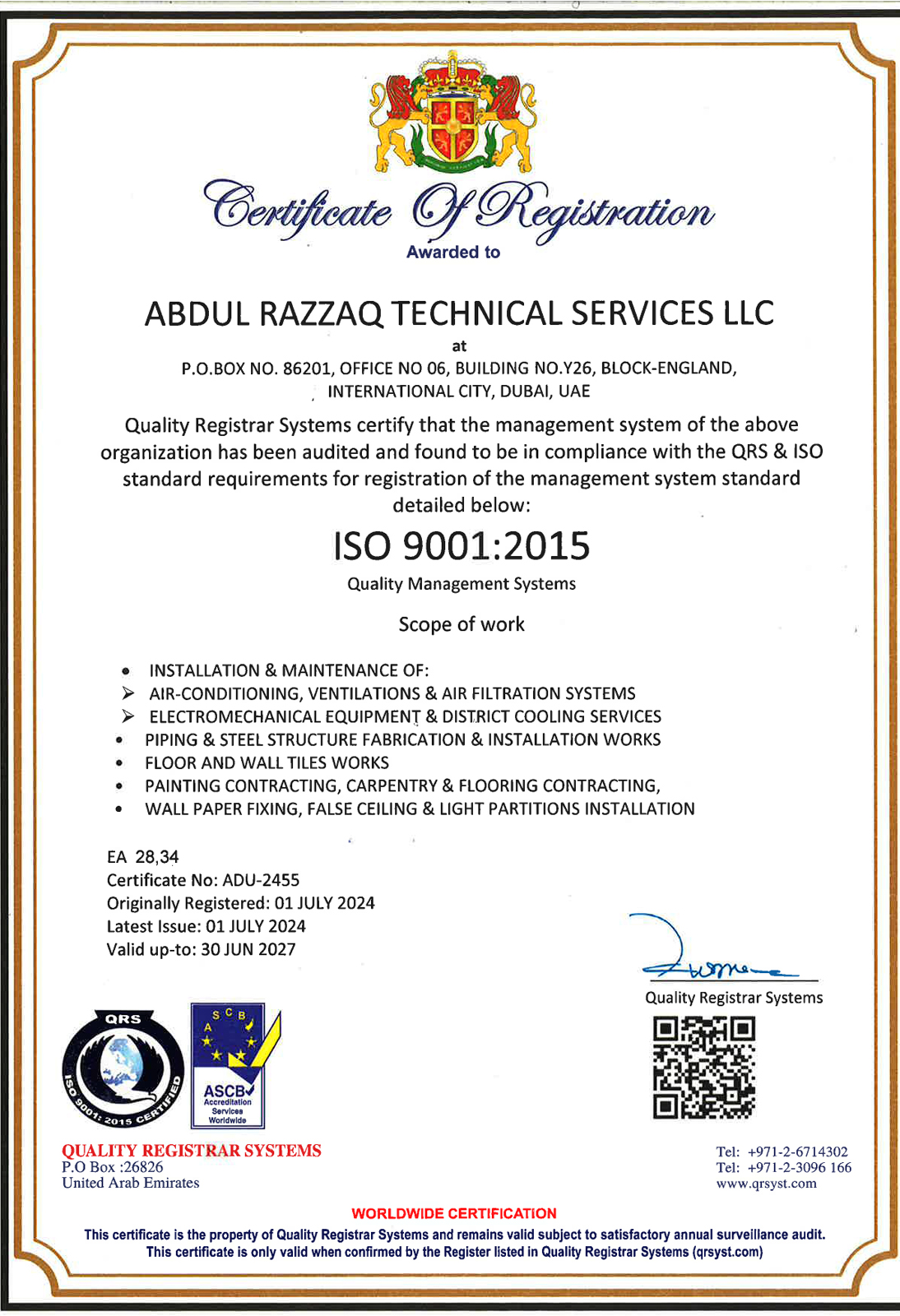
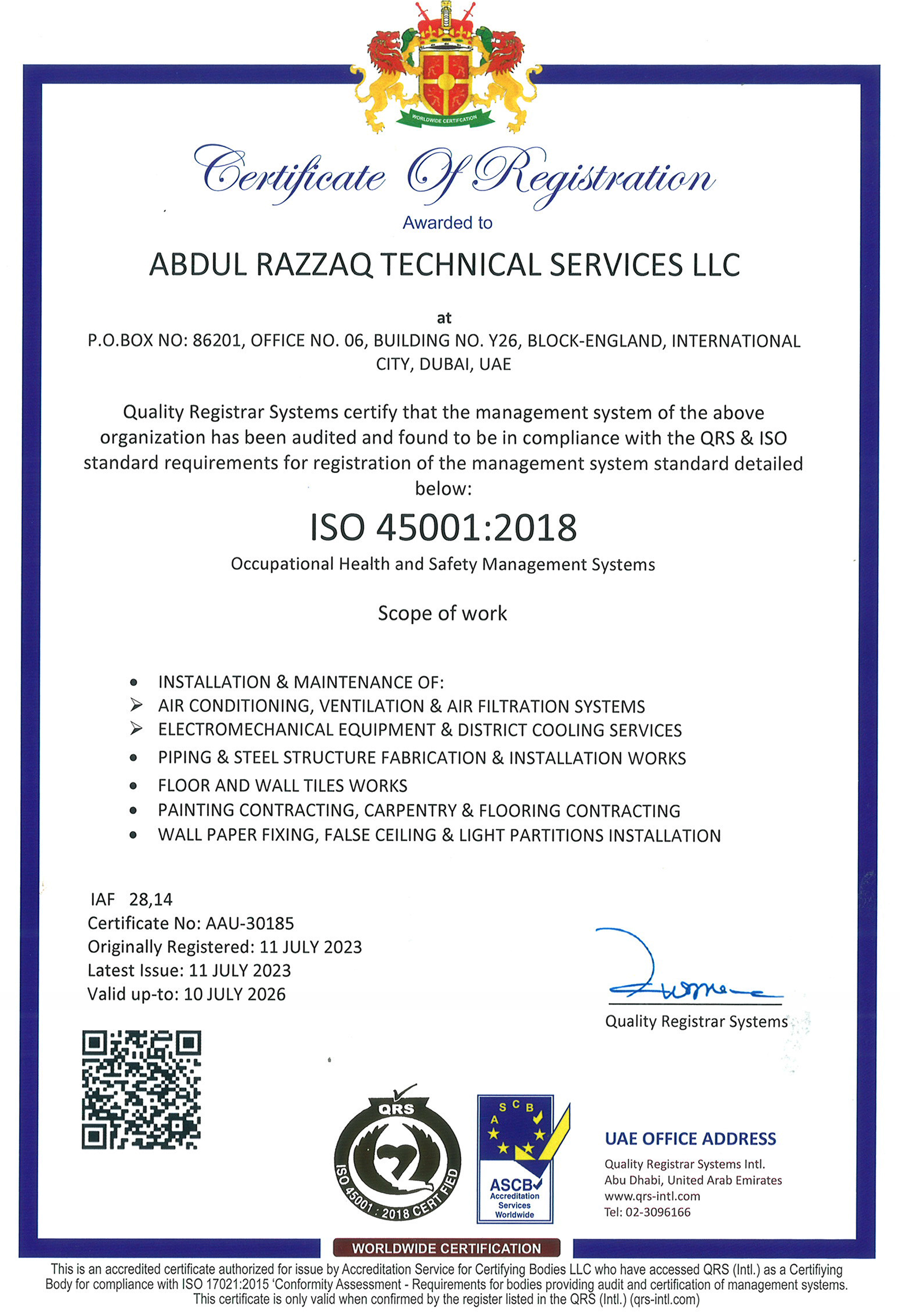
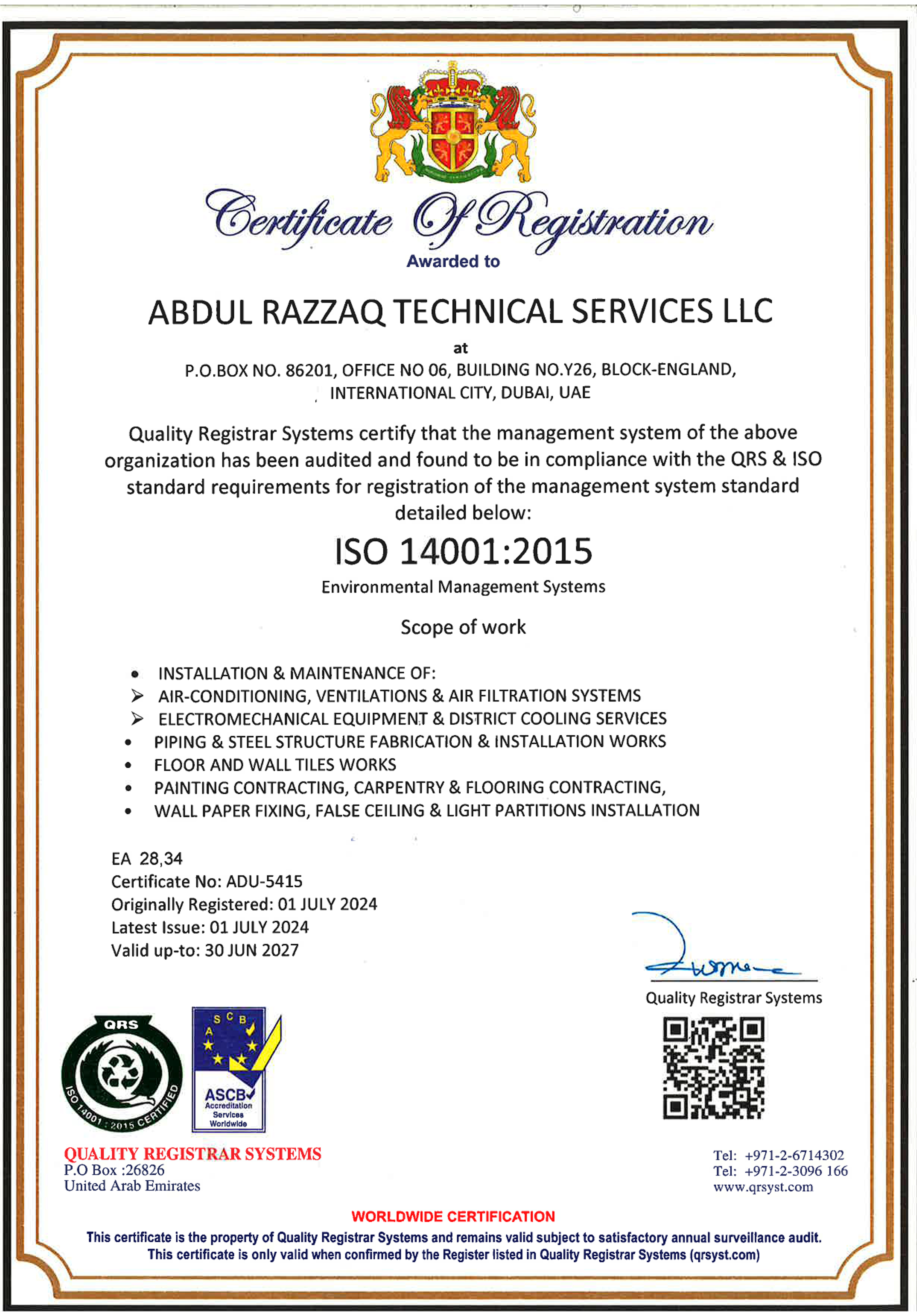
● ISO & ICV Certified: ISO 9001:2015, ISO 45001:2018, and ICV certified. International standards govern every installation phase.
● Provider Coordination: Direct management of technical submissions and approvals with Empower, Tabreed, Marafiq, and other district cooling providers.
● DEWA & ADDC Compliance: All installations meet DEWA district cooling regulations and ADDC technical specifications for utility corridor crossings.
● Specialized Pipeline Expertise: Focused experience in pre-insulated pipe welding, jointing, and thermal insulation integrity testing.
● Utility Corridor Approvals: Proven track record securing NOCs for utility corridor crossings across Dubai and Abu Dhabi.
● ASHRAE Standards: Design and installation follow ASHRAE guidelines for hydronic systems and thermal performance.
ETS Room and Energy Transfer Station Integration
The Energy Transfer Station (ETS) is the critical interface between the primary district cooling network and a building's internal air conditioning system. Precise integration is essential for accurate energy metering, pressure control, and efficient heat exchange.
Scope of work for ETS room integration includes:
● Installation of plate heat exchangers with proper alignment and gasket compatibility
● Connection to pre-insulated supply and return pipes at building boundary
● Integration of PICVs, balancing valves, and strainers for flow regulation
● Installation of ultrasonic or electromagnetic energy meters for billing
● Pressure and temperature regulation within the ETS
● BMS integration for remote monitoring and automated operation
Proper ETS integration guarantees that each connected building receives the correct amount of chilled water, optimizing overall network performance and enabling accurate utility billing.
Pre-Insulated Pipe Welding and Jointing
The long-term efficiency of a district cooling network relies heavily on the integrity of its pre-insulated piping system. Certified welders and jointing technicians follow strict procedures to ensure a permanently leak-free and thermally efficient network.
Pipeline installation methodology covers:
● Welding of steel carrier pipes: All welding performed to ASME and API standards, with procedures for hydrostatic testing and non-destructive testing (NDT), including radiography to verify weld quality.
● Jointing and insulation: After welding, each joint is meticulously sealed with polyurethane foam insulation and outer HDPE casing, ensuring continuous insulation and preventing thermal bridging.
● Installation of pre-insulated pipes: Laying of pipes in trenches or on sleepers with proper support and protection for the insulation layer. Thermal insulation integrity testing verifies performance.
● Buried chilled water pipeline installation: Trenching, bedding, backfilling, and compaction per utility corridor requirements with NOC coordination.
Valve Chamber and Pipeline Component Installation
Critical network components like isolation valves, butterfly valves, strainers, and expansion joints are housed in accessible valve chambers. Proper construction and installation of these chambers are crucial for network operation and maintenance.
Complete installation services for:
● Butterfly valves for isolation and flow regulation
● Expansion joints to accommodate thermal expansion and contraction
● Drain and air release valves for system maintenance
● Concrete or GRP valve chambers for easy access and inspection
● District cooling utility corridor components with proper signage and access
System Commissioning: Pressure Testing, Flushing, and TAB
A newly installed district cooling network must undergo a rigorous commissioning process to prove its integrity and performance before being handed over. This sequence ensures the system operates as designed.
The commissioning process includes:
● Pressure Testing: Pipeline filled with water and pressurized to exceed working pressure (typically 1.5× design pressure), verifying the strength and leak-tightness of all welds and joints.
● Flushing and Chemical Cleaning: Network flushed at high velocity to remove debris, welding slag, and foreign material. Water is chemically treated to prevent corrosion and biological growth.
● Testing, Adjusting & Balancing (TAB): TAB specialists measure and adjust water flow rates at each ETS room and key points in the network. Chilled water balancing ensures every building receives its design flow, preventing over-cooling in some areas and under-cooling in others.
● Thermal Insulation Integrity Testing: Verification that insulation remains continuous and effective across all joints and fittings.
Sustainability and Energy Infrastructure Solutions
District cooling is a cornerstone of the UAE's sustainable infrastructure strategy. By centralizing cooling production, these systems significantly lower electricity consumption and reduce carbon emissions compared to conventional building-level chillers. Efficient distribution networks with high-quality pre-insulated piping maximize these benefits.
Modern district cooling networks contribute to:
● Reduced electricity consumption across large developments (up to 40% savings vs conventional systems)
● Lower carbon footprint supporting UAE sustainability goals
● Improved energy efficiency and operational cost savings
● Support for sustainable urban planning and green building initiatives
District Cooling Projects Delivered Across the UAE
Residential Tower Complex, Dubai
Eight ETS rooms installed for a residential development of 12 towers. Scope included plate heat exchangers, PICVs, ultrasonic flow meters, and BMS integration. Coordination with Empower ensured all tie-in requirements were met. Full TAB completed with all eight rooms achieving design flow rates.
District Cooling Plant Expansion, Dubai
Additional distribution network and ETS rooms installed as part of a district cooling plant expansion serving a new master development. Pre-insulated pipe connections are made to the primary network. Metering installations complied with DEWA calibration standards. Utility corridor NOCs secured.
Chilled Water Network for Commercial Development, Abu Dhabi
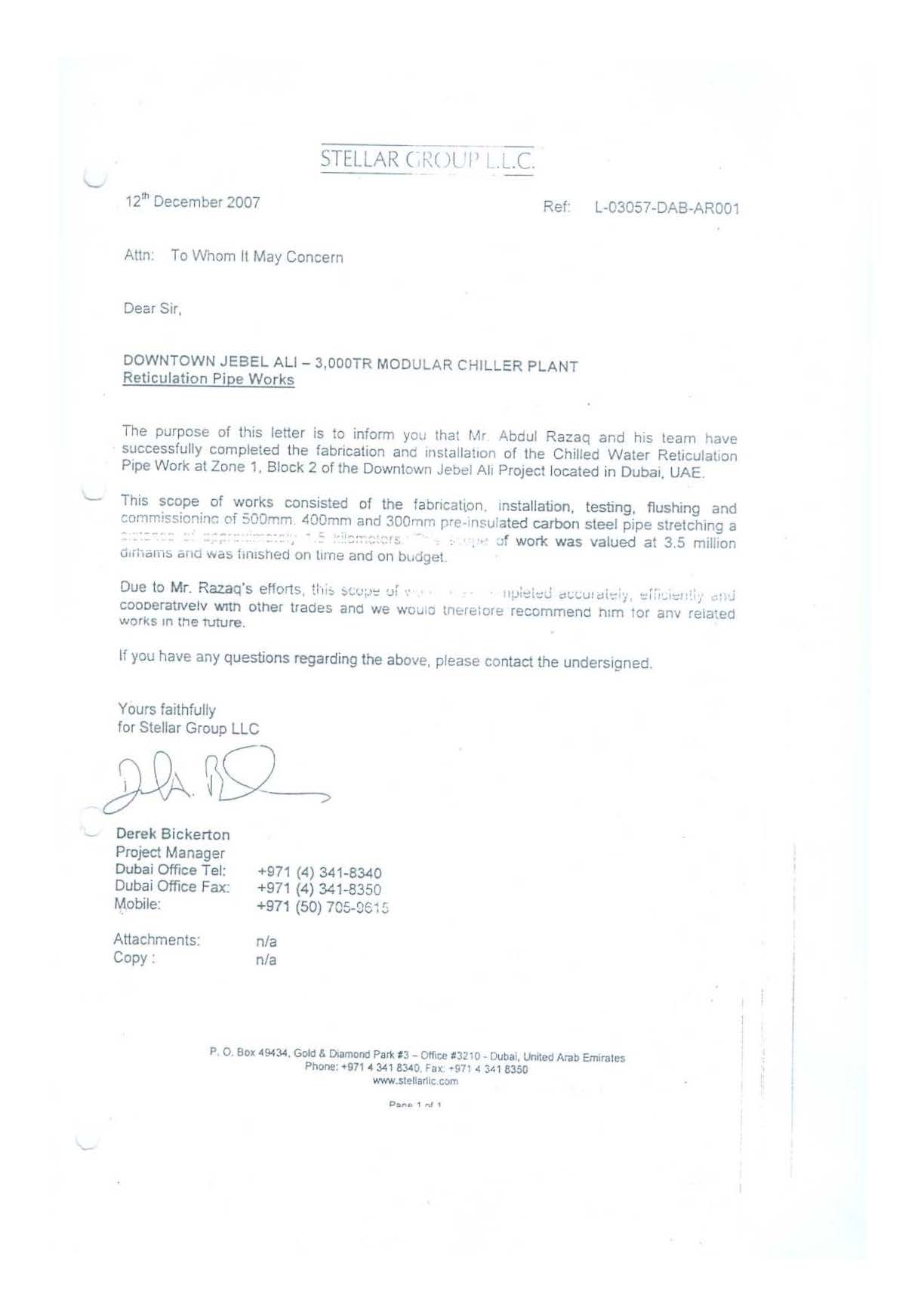
Installation of 3.5 km of pre-insulated chilled water pipeline for a mixed-use commercial development. Scope included trenching, welding, jointing, valve chamber construction, and full system commissioning. Coordination with ADDC and Tabreed ensured all approvals were secured.
FAQs
What is a district cooling network contractor responsible for?
A district cooling network contractor specializes in designing, supplying, and installing the buried or above-ground pipeline network that distributes chilled water from a central plant to the ETS rooms of connected buildings. This includes pre-insulated pipe welding, valve chamber installation, and system commissioning.
What approvals are required for district cooling installation in the UAE?
Installation must comply with DEWA district cooling regulations in Dubai or ADDC technical specifications in Abu Dhabi. NOCs for utility corridor crossings are required. Provider-specific approvals from Empower, Tabreed, or Marafiq are also mandatory. The team manages all technical compliance and coordination.
What are pre-insulated pipes, and why are they used?
Pre-insulated pipes consist of a steel carrier pipe, a layer of polyurethane foam insulation, and an outer HDPE casing. They are essential for minimizing thermal loss as chilled water travels through the ground, ensuring efficient energy delivery and preventing condensation.
What is chilled water balancing?
Chilled water balancing is the process of adjusting water flow through the distribution network and ETS rooms to match design requirements. Proper balancing ensures all connected buildings receive correct flow rates, preventing under-cooling and optimizing energy efficiency.
How deep are district cooling pipelines installed?
Installation depth typically ranges from 1.2 to 2.5 meters, depending on soil conditions, thermal requirements, and utility corridor coordination. Depth is calculated to prevent heat gain from ambient ground temperature and accommodate other buried utilities.
What is the cost range for district cooling network installation?
Costs vary based on pipe diameter, length, soil conditions, and utility corridor requirements. Typical ranges are AED 3,000-8,000 per linear meter for complete installation, including trenching, pipe, welding, jointing, and commissioning.
What standards apply to pipeline welding in district cooling projects?
International standards such as ASME B31.3 and API 1104 are followed. Welding procedures are qualified, and welds are inspected using radiography (RT) or ultrasonic testing (UT) to ensure integrity.
Request a District Cooling Network Consultation
District cooling infrastructure requires specialized expertise in pre-insulated pipe welding, utility corridor coordination, and provider approvals. Experienced teams bring proven track records with Empower, Tabreed, and Marafiq to every project. Submit your project specifications or discuss utility corridor requirements with our engineering team for a structured proposal.