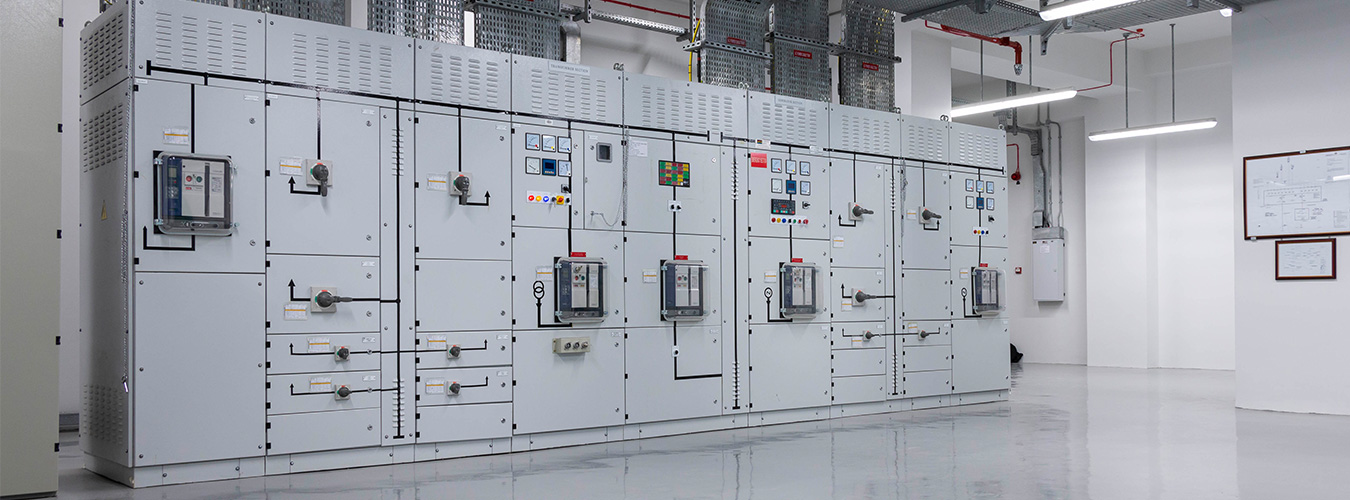
Professional ETS Room Installation Contractor UAE
Between the district cooling network and your building, the Energy Transfer Station (ETS) serves as the critical interface. Chilled water from the central plant enters the ETS room, heat exchange occurs, pressure is regulated, and cooled water is delivered to every floor through precisely installed equipment. Abdul Razzaq Technical Services LLC provides specialized ETS room installation contractor services across the UAE. Heat exchangers, control valves, piping systems, instrumentation, and automation equipment are installed to meet district cooling provider specifications and building requirements. Developers, consultants, and district cooling operators rely on these installations for commercial towers, residential developments, mixed-use complexes, and industrial facilities.
Why Abdul Razzaq Technical Services LLC
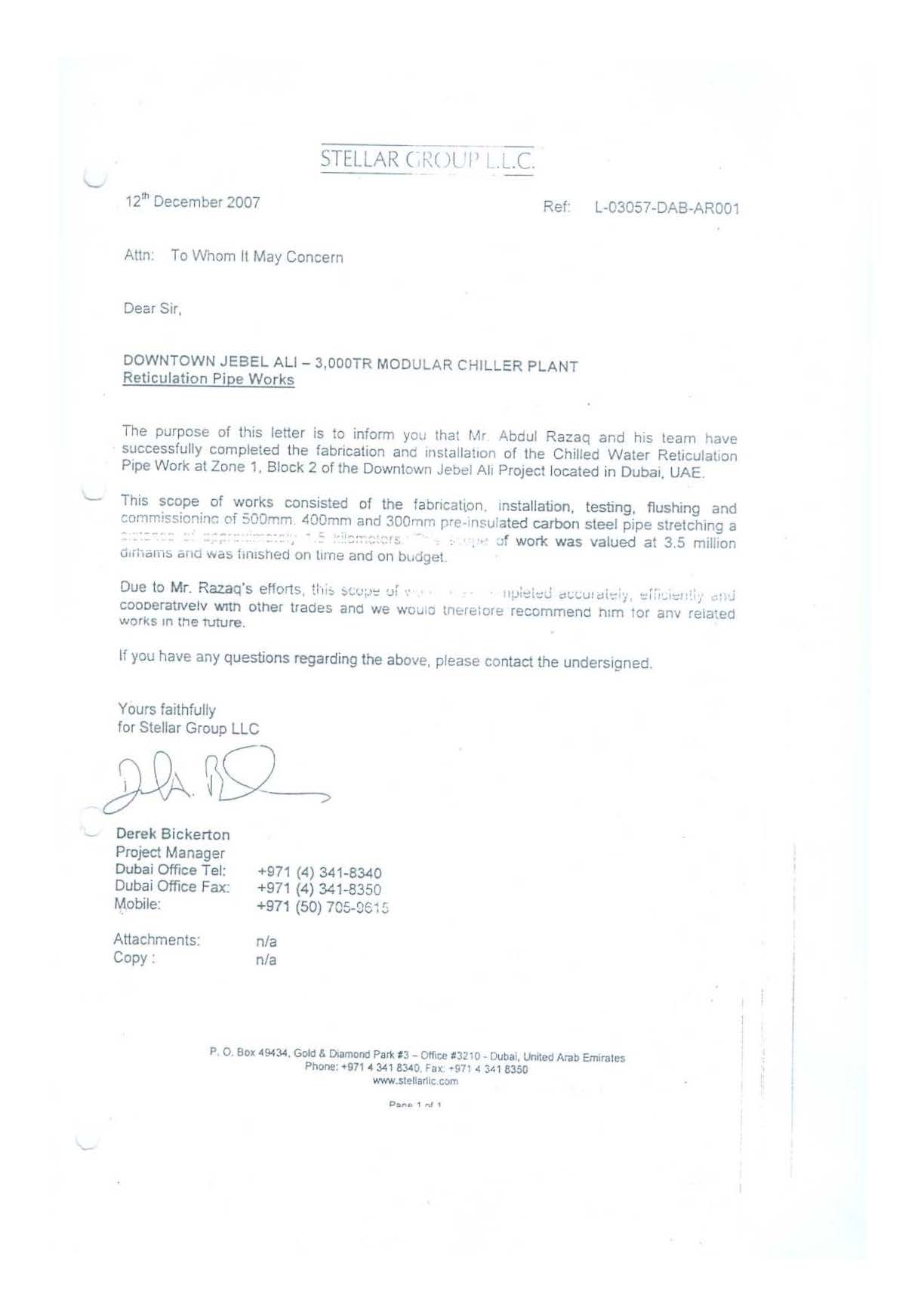
● UAE Since 2007: Over 18 years of continuous operation. Deep understanding of district cooling provider requirements and project execution norms.
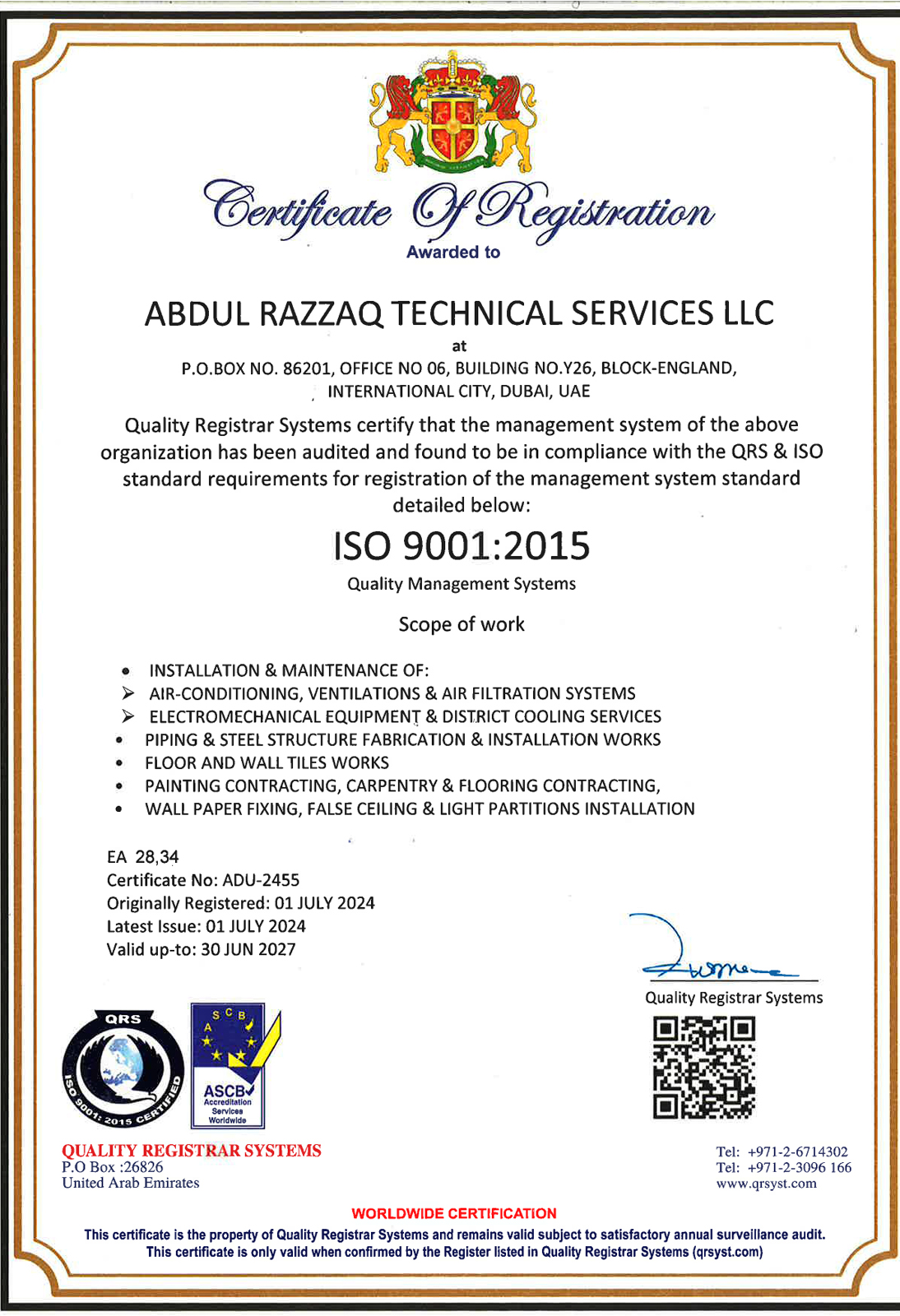
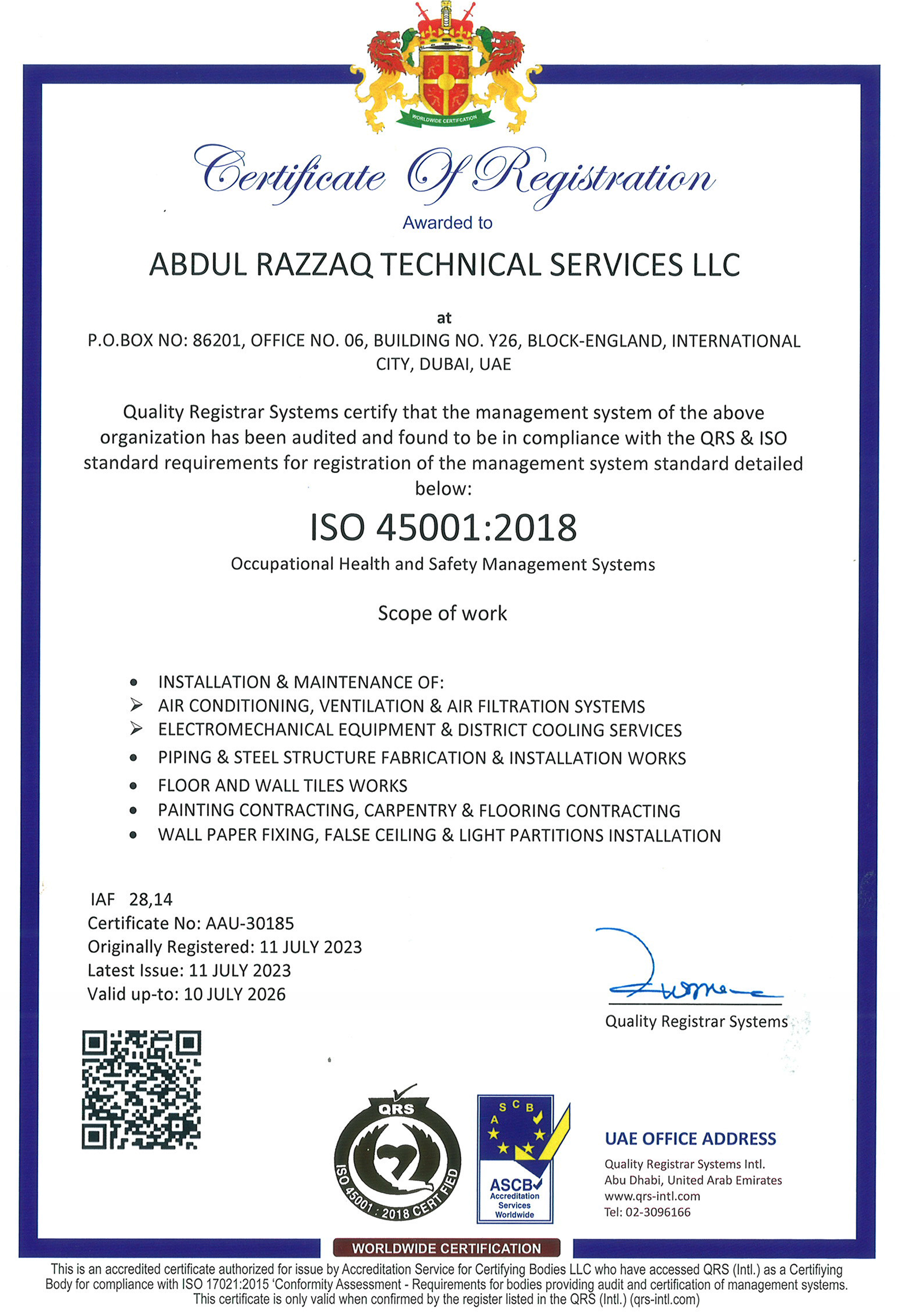
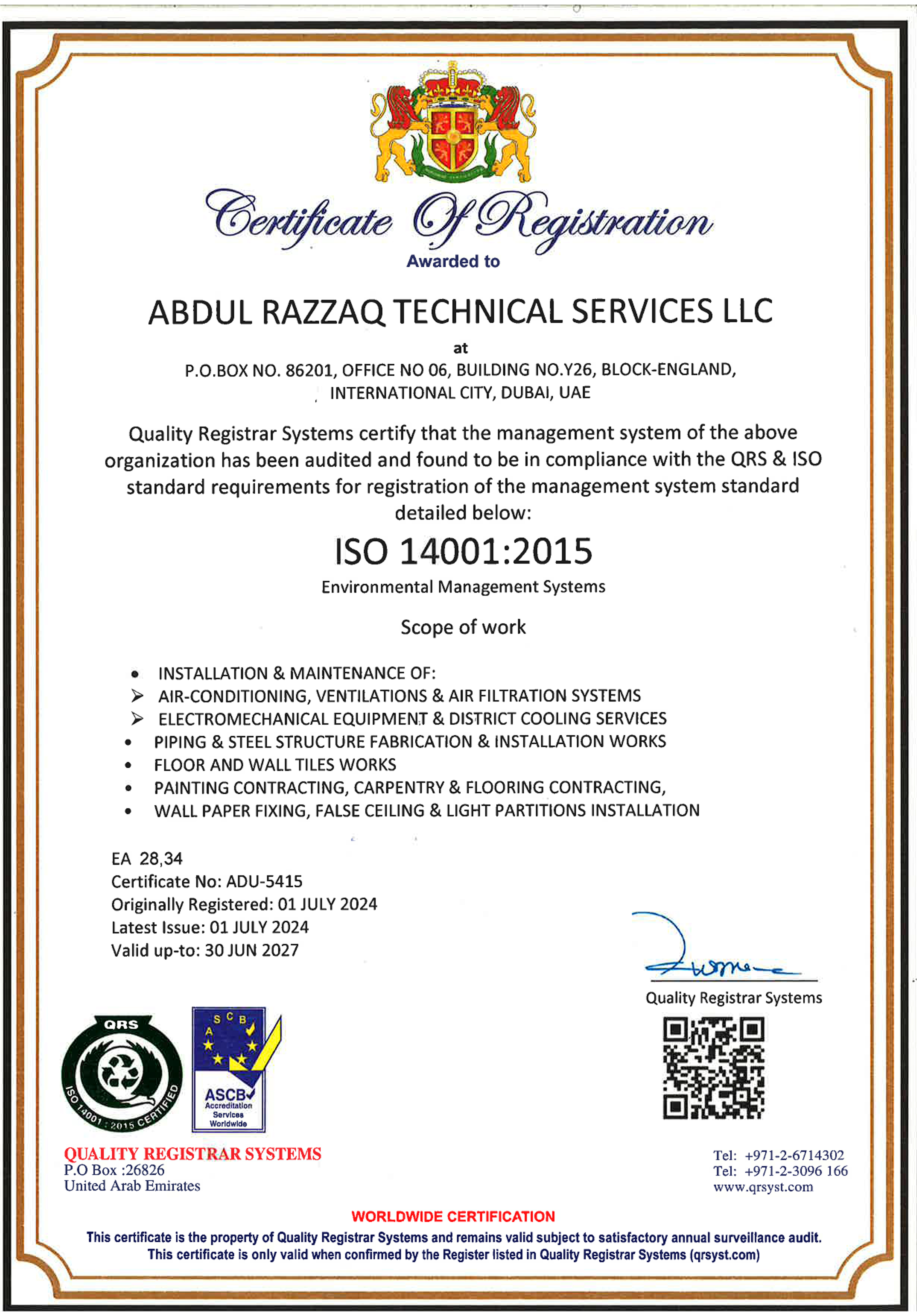
● ISO & ICV Certified: ISO 9001:2015, ISO 45001:2018, and ICV certified. International standards govern every installation.
● Provider Coordination: Direct management of technical submissions and approvals with Empower, Tabreed, Marafiq, and other district cooling providers.
● DEWA & ADDC Compliance: All installations meet DEWA district cooling regulations and ADDC technical specifications.
● ASHRAE Standards: Design and installation follow ASHRAE guidelines for hydronic systems and heat exchanger performance.
● Specialized Expertise: ETS rooms are a core specialization, not a sideline. Engineers understand specific provider requirements.
● BMS Integration Expertise: Control systems programmed to communicate with building management systems for remote monitoring.
Core Components of Professional ETS Installation
Every ETS room contains a precise combination of mechanical and control components. Correct specification and installation determine whether the system delivers stable cooling, manages pressure safely, and operates efficiently over decades.
Plate Heat Exchanger Installation & Alignment
Cooling energy from the district network transfers to the building's closed-loop system through plate heat exchangers. Installation includes proper alignment, gasket compatibility checks, and torque specifications for bolted connections. Thermal performance validation occurs during commissioning.
Pressure-Independent Control Valves (PICV)
Stable temperature control depends on accurate flow regulation. Pressure-independent control valves maintain set flow rates regardless of pressure fluctuations in the district network. Installation includes proper positioning, actuator mounting, and stroke verification.
Chilled Water Piping & Pre-Insulated Connections
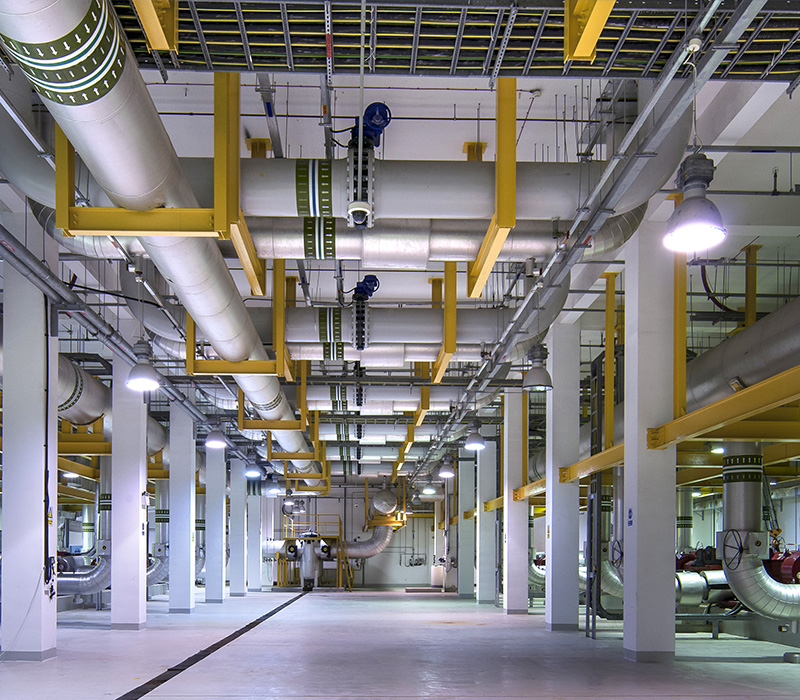
Supply and return piping within the ETS room connect to the district network through pre-insulated pipes at the building boundary. Pipe fabrication, supports, expansion loops, and insulation are installed to handle thermal movement and prevent condensation.
Flow Metering & Energy Measurement
District cooling billing relies on accurate consumption data. Ultrasonic or electromagnetic flow meters paired with temperature sensors measure energy transfer. Metering installations comply with district cooling provider calibration requirements.
BMS Integration & Control Panels
Automated operation requires integration with the building management system. Control panels with PLCs receive signals from temperature sensors and pressure transmitters, modulating valves to maintain set points. Remote monitoring capability is established during commissioning.
Engineering the Interface with District Cooling Networks
An ETS room forms the hydraulic and thermal bridge between the primary district cooling network and the building's secondary system. Several critical interfaces demand precise engineering.
Primary Network Tie-In Coordination
Connection to underground supply and return pipes requires coordination with the district cooling provider. Tie-in points, isolation valves, and drainage provisions are installed according to the provider's technical requirements. Pressure testing before connection verifies integrity.
Pressure Reducing Stations
District networks often operate at pressures exceeding building system design limits. Pressure-reducing stations with safety relief valves protect downstream equipment. Redundancy is typically provided to maintain operation during maintenance.
Expansion Compensation
Thermal expansion in piping systems must be accommodated. Expansion joints, loops, or bellows are installed at calculated intervals to absorb movement without stressing equipment connections.
Building Riser Connection
From the ETS outlet, chilled water travels through building risers to every floor. Flanged connections at the ETS boundary allow isolation during building maintenance without disrupting the district network.
Step-by-Step Installation Method
Engineering & Design Review
Design drawings and district cooling provider specifications are reviewed in detail. Equipment layouts were prepared showing heat exchanger positions, valve access, piping routes, and electrical connection points. Coordination with structural teams confirms space allocations.
Equipment Installation & Piping
Major equipment set in place, aligned, and anchored. Heat exchangers leveled, valve actuators mounted, and pump alignments checked. Chilled water piping was fabricated and installed. Flanged, welded, and threaded connections made per specification.
Testing & Insulation
Pressure testing at 1.5 times design pressure verifies integrity before insulation. Closed-cell insulation is applied to all chilled water piping and equipment to prevent condensation and heat gain. Vapor barriers sealed properly.
Controls, Commissioning & Handover
Sensors and flow meters installed and wired to control panels. Control sequences programmed and tested. Full system operation demonstrated under simulated load. O&M manuals, as-built drawings, and test certificates compiled for handover.
Authority Standards & Provider Compliance
● DEWA District Cooling Regulations: Compliance with DEWA standards for metering, pressure management, and backflow prevention.
● ADDC Technical Specifications: Material approvals and inspection protocols per Abu Dhabi Distribution Company requirements.
● Empower / Tabreed / Marafiq: Provider-specific technical standards for tie-ins, metering, and communication protocols. Submissions and approvals managed directly.
● ASHRAE Standards: Design and installation follow ASHRAE guidelines for hydronic systems and heat exchanger performance.
● ISO Certified: Quality management (ISO 9001) and safety (ISO 45001) systems govern all installations.
Selected Project Experience
Residential Tower Complex, Dubai
Eight ETS rooms installed for a residential development of 12 towers. Scope included plate heat exchangers, PICVs, ultrasonic flow meters, and BMS integration. Coordination with Empower ensured all tie-in requirements met. Full TAB completed with all eight rooms achieving design flow rates.
Commercial Office Tower, Abu Dhabi
Single ETS room serving a G+25 commercial tower installed with twin heat exchangers for N+1 redundancy. Pressure-reducing stations configured for high-rise zone requirements. ADDC witnessed commissioning and approved installation.
District Cooling Plant Expansion, Dubai
Additional ETS rooms installed as part of a district cooling plant expansion serving a new master development. Pre-insulated pipe connections made to primary network. Metering installations complied with DEWA calibration standards.
FAQs
What is an ETS room in district cooling?
An Energy Transfer Station (ETS) is the mechanical room containing equipment that transfers chilled water cooling from the district network to a building's internal system. It houses heat exchangers, control valves, pumps, meters, and controls.
What approvals are required for ETS installation in Dubai?
DEWA district cooling regulations apply, along with specific technical requirements of the district cooling provider (Empower, Tabreed, etc.). Building permit approvals from Dubai Municipality are also required. The team manages all submissions.
How long does ETS room installation take?
Typical installation requires 4-8 weeks from mobilization to commissioning for a standard commercial building ETS. Complex installations with multiple heat exchangers or redundancy may take longer. Detailed schedule provided during quotation.
What is the cost range for ETS room installation?
Costs vary based on cooling capacity, equipment selection, and complexity, typically ranging from AED 150,000-500,000 for standard commercial applications. Detailed quotation provided after reviewing project specifications.
Can an existing ETS room be upgraded?
Yes. Older ETS rooms can be retrofitted with more efficient heat exchangers, modern controls, or additional capacity. Feasibility depends on space availability and piping configurations.
How is cooling energy measured in an ETS?
Ultrasonic or electromagnetic flow meters measure chilled water flow, while temperature sensors measure supply and return temperatures. These values calculate energy consumption in RT-h or kW-h for billing.
What is the difference between PICV and standard control valves?
Pressure-independent control valves maintain set flow rates regardless of pressure fluctuations in the district network, ensuring stable temperature control. Standard valves require additional balancing and are affected by pressure changes.
Contact Our District Cooling Specialists
Reliable ETS room installation contractors ensure stable cooling delivery, accurate energy metering, and long-term operational efficiency. Abdul Razzaq Technical Services LLC brings specialized experience to every district cooling project. Discuss your ETS room requirements with our engineering team. Site conditions, provider requirements, and project timelines will be reviewed to provide a structured proposal.