District Cooling Plant Contractor UAE
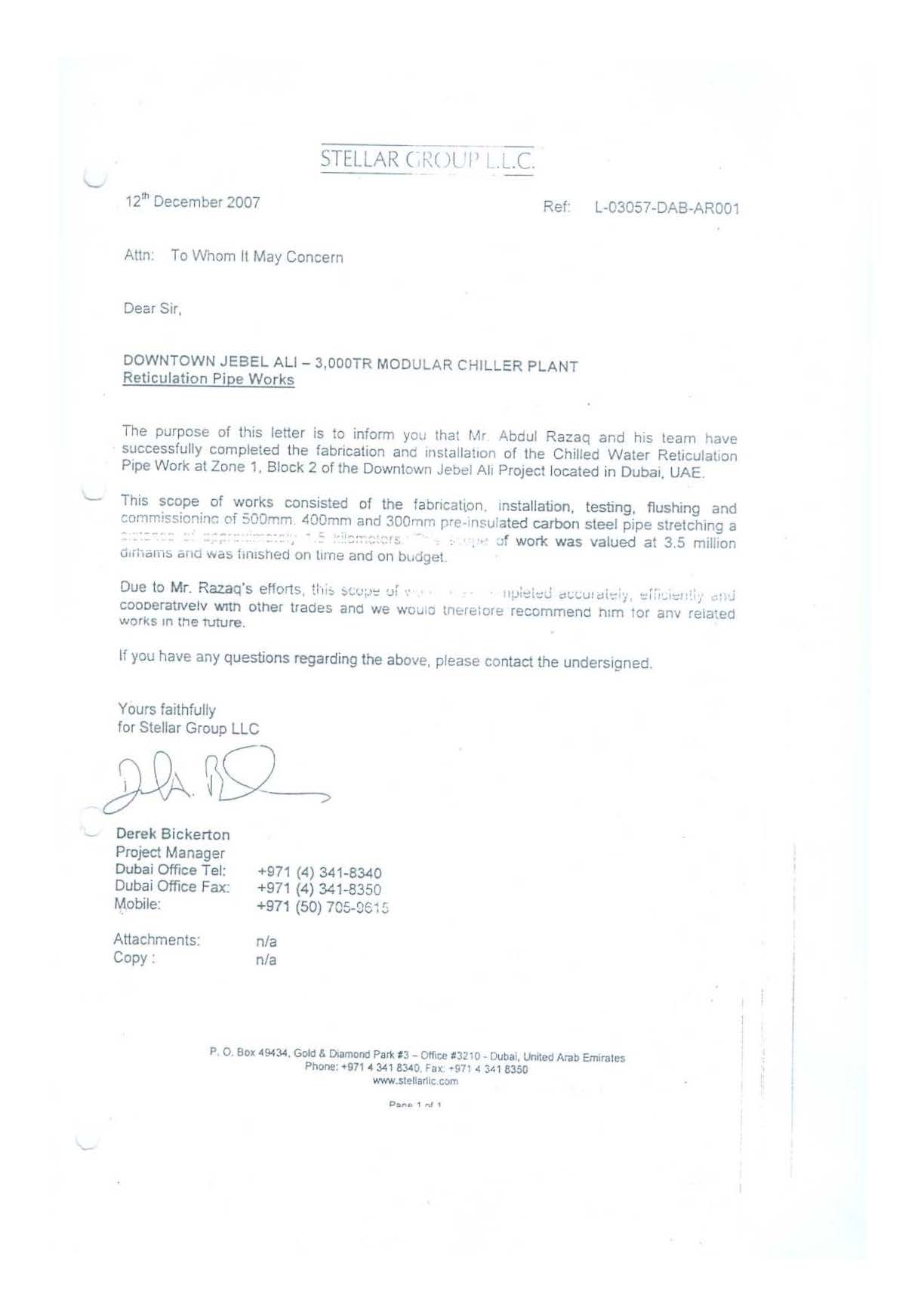
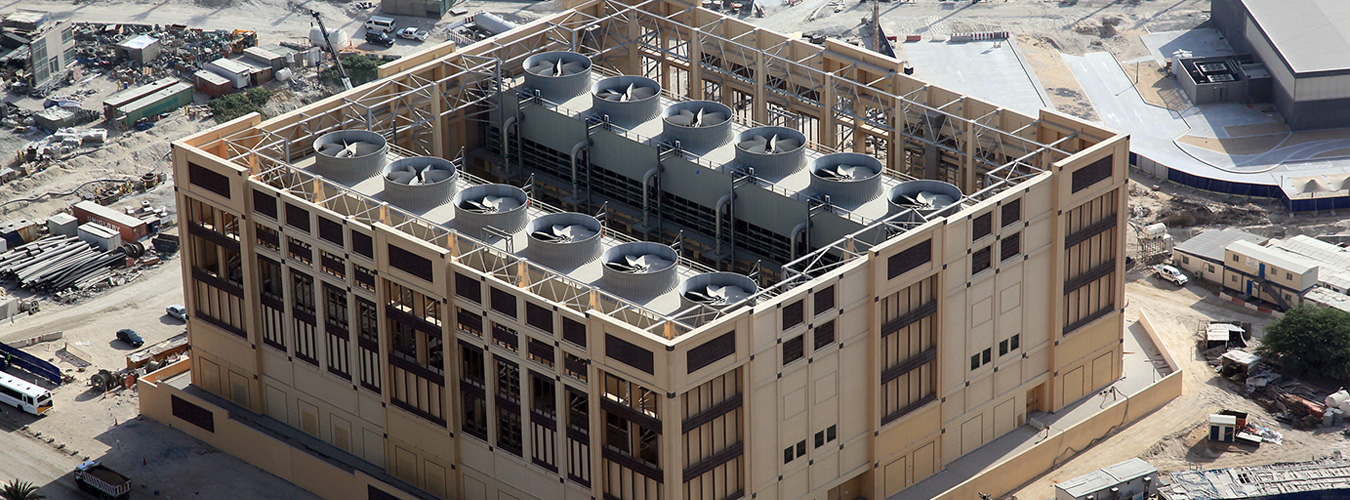
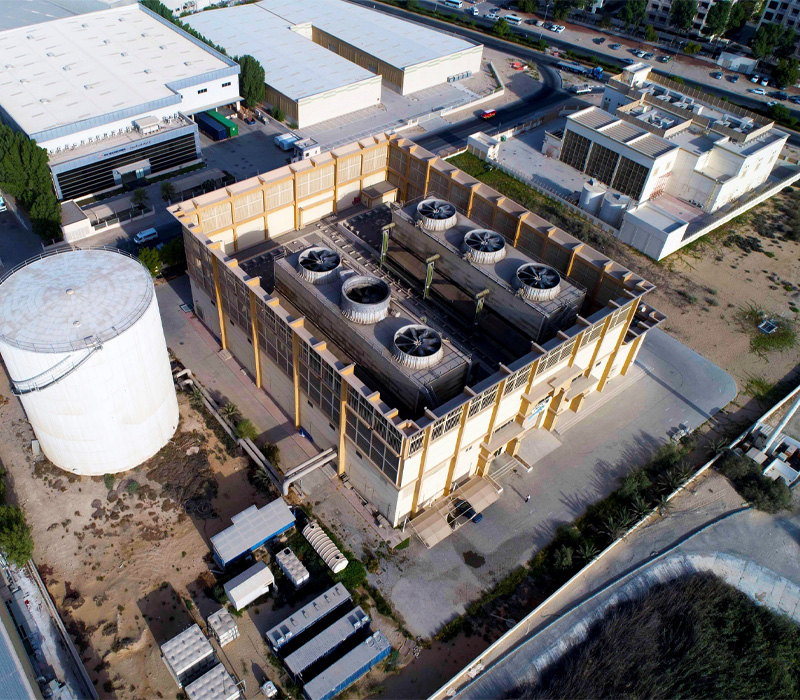
From a central plant, chilled water flows through underground networks to cool entire communities. District cooling systems support large-scale developments across the UAE, including residential towers, airports, hospitals, and commercial districts, all of which depend on reliable central plant infrastructure. Abdul Razzaq Technical Services LLC provides district cooling plant contractor services for the construction and installation of complete cooling facilities. Mechanical systems, piping networks, equipment installation, and plant integration are delivered for reliable chilled water distribution across large projects. Since 2007, the team has worked closely with master developers, main contractors, and utility providers, including Empower, Tabreed, and Marafiq, to deliver cooling plants that meet the stringent standards of UAE authorities.
Why Plant Owners Choose Abdul Razzaq Technical Services LLC
● UAE Since 2007: Over 18 years of continuous operation. Deep understanding of district cooling plant hydraulics, equipment interfaces, and control sequences.
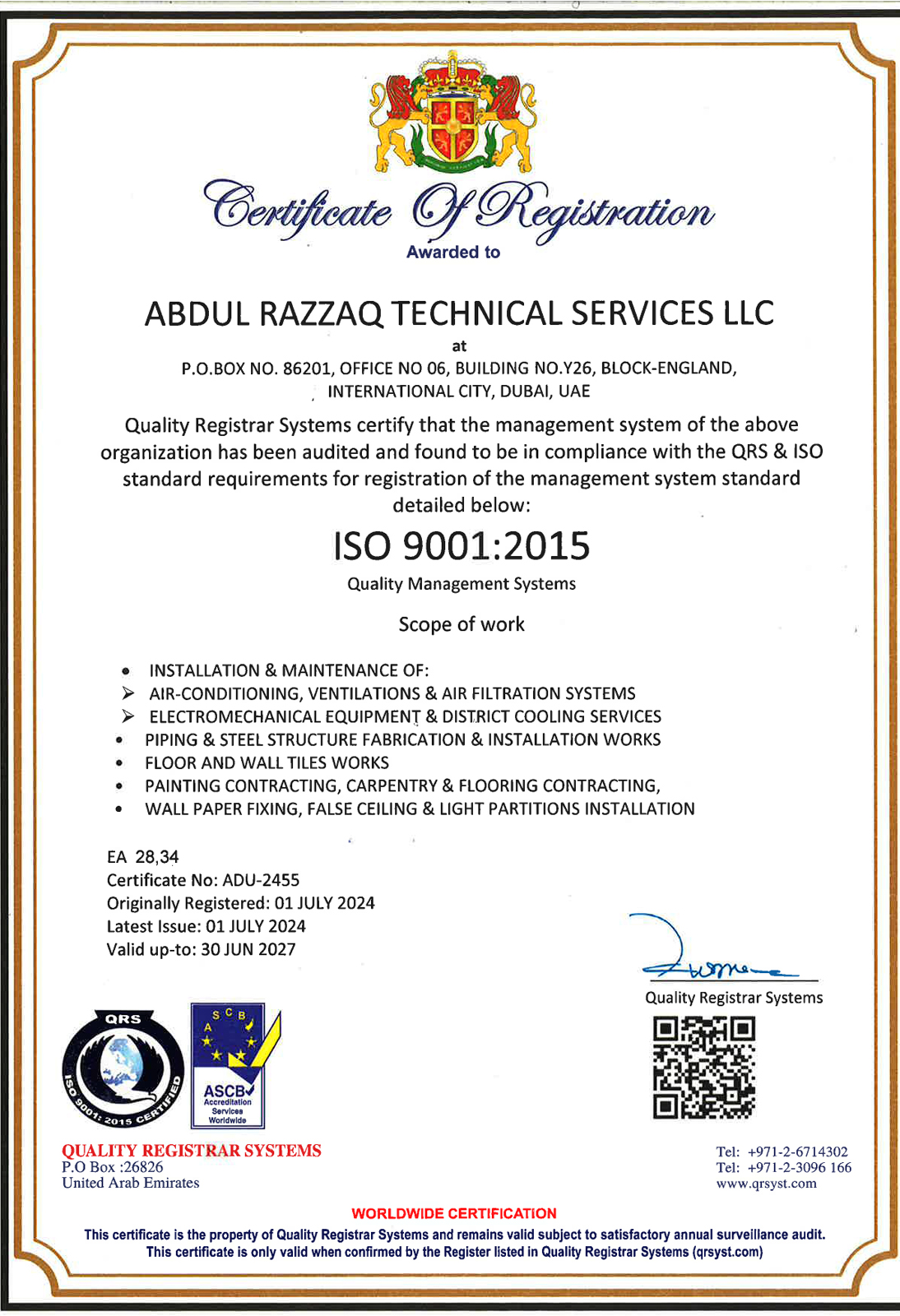
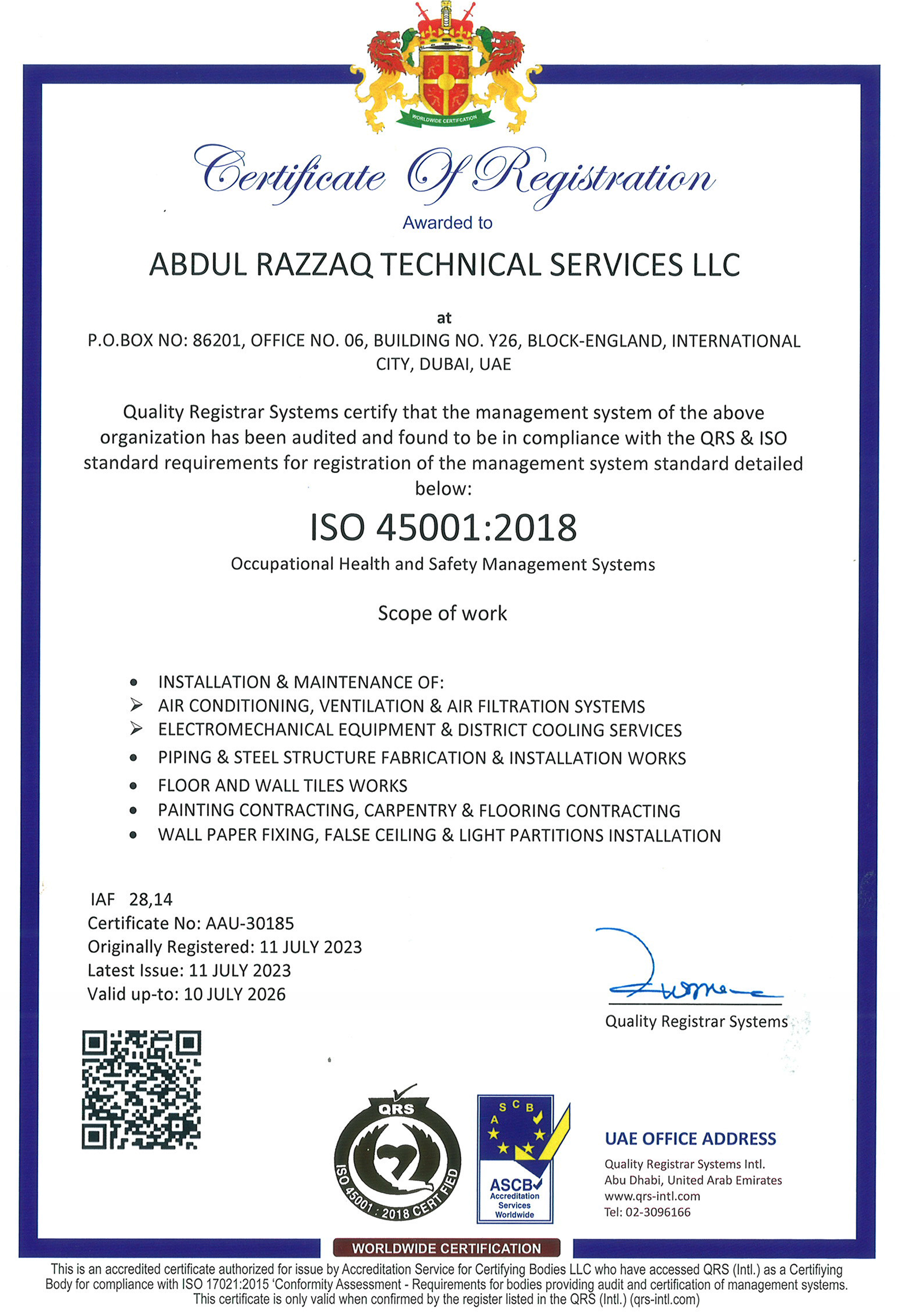
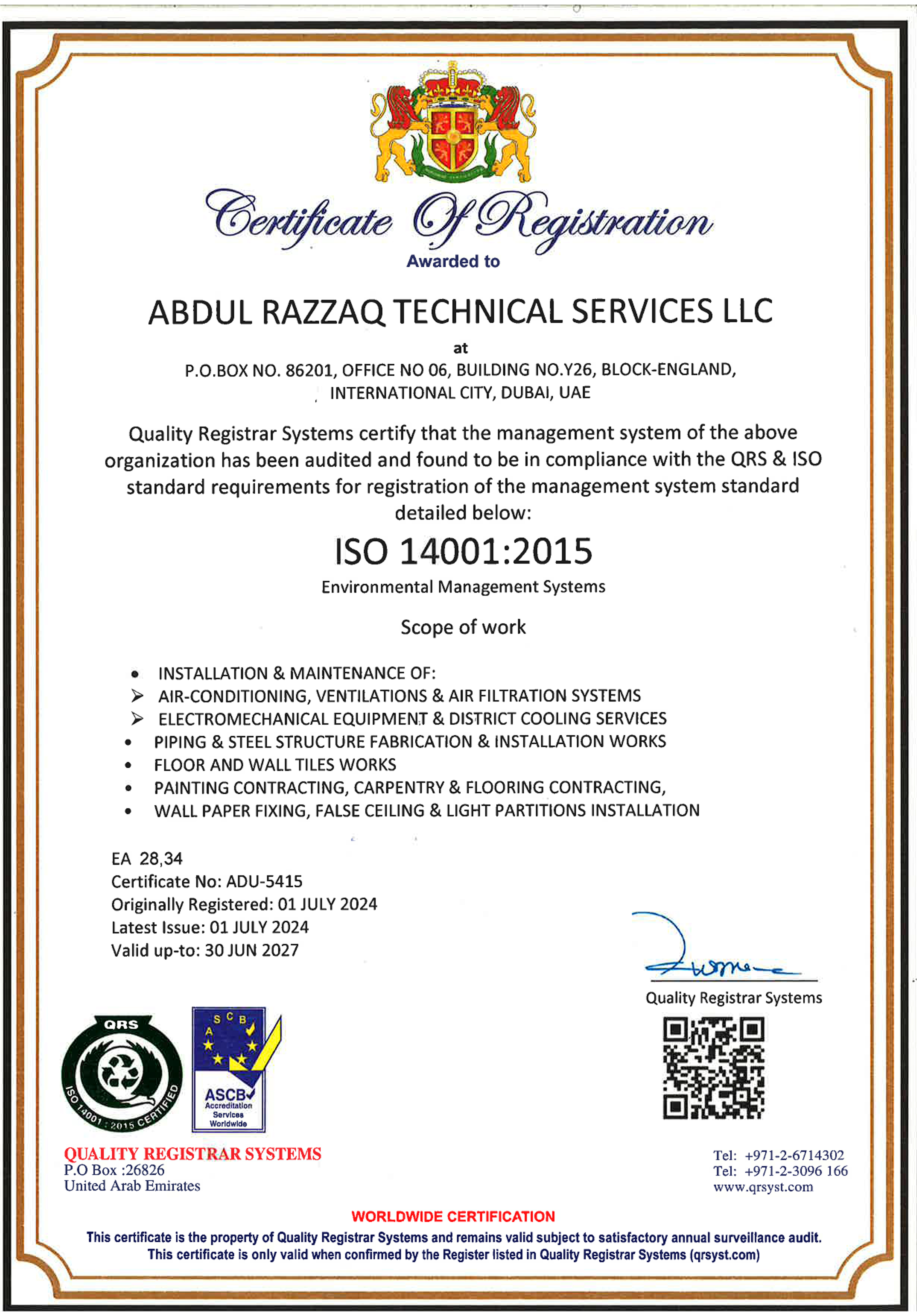
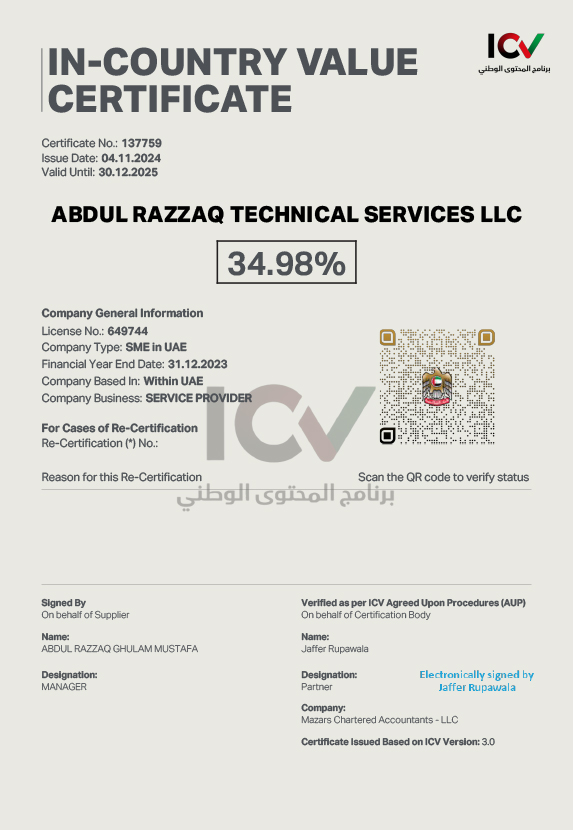
● ISO & ICV Certified: ISO 9001:2015, ISO 45001:2018, and ICV certified. International standards govern every installation phase.
● Provider Coordination: Direct management of technical submissions and approvals with Empower, Tabreed, Marafiq, and other district cooling providers.
● Shutdown Execution: Proven capability to integrate new equipment into existing operational plants with zero disruption to connected buildings.
● Zero-Delay Commissioning: Structured testing protocol ensures plants achieve design capacity and efficiency on schedule.
● DEWA & ADDC Compliance: All installations meet DEWA district cooling regulations and ADDC technical specifications.
● ASHRAE Standards: Plant design and installation follow ASHRAE guidelines for equipment selection, piping, and controls.
● EPC Coordination Experience: Installation sequenced with civil, structural, and electrical packages to maintain schedule.
Complete District Cooling Plant Construction Scope
District cooling plants combine civil, mechanical, electrical, and control systems into a single operating facility. The scope covers every discipline required to deliver an operational plant.
Civil Works
Site preparation, concrete foundations, equipment pads, and plant buildings are constructed to support heavy cooling equipment. Structural slabs are designed for dynamic loads from rotating machinery. Equipment access and maintenance clearances are incorporated.
Mechanical Installation
Chillers (centrifugal, screw, absorption), pumps (primary, secondary, condenser), cooling towers, and plate heat exchangers are set and aligned to manufacturer specifications. Large-diameter carbon steel and GRP piping are fabricated and installed with all isolation, control, and balancing valves.
Electrical & Control Systems
Low-voltage and high-voltage power distribution, motor control centers (MCC), variable frequency drives (VFD), and transformers are installed. Building Management System (BMS) integration enables centralized monitoring and automated plant optimization.
Thermal Energy Storage (TES) Tanks
Where specified, TES tanks are constructed and integrated to shift cooling load to off-peak hours. Stratified chilled water tanks or ice storage systems are built to district cooling provider specifications.
Valve Chambers & Distribution Headers
Valve chambers housing isolation and control valves are constructed at plant tie-in points. Distribution headers are fabricated to balance the flow to multiple network branches.
Equipment Installation & Precision Alignment
Long-term plant reliability depends on proper equipment installation. Every component is set, aligned, and tested to specification.
Chiller Installation
Centrifugal, screw, and absorption chillers are precisely set on foundations. Vibration isolators are installed according to calculations. Refrigerant piping, oil lines, and control wiring are connected. Initial oil circulation and refrigerant charging are completed under supervision.
Pump & Motor Alignment
Primary, secondary, and condenser water pumps are aligned with motors using laser alignment tools. Couplings are adjusted to achieve tolerances specified by pump manufacturers, typically 0.05mm or better for direct-coupled equipment.
Cooling Tower Assembly
Induced-draft or forced-draft cooling towers are erected and assembled. Fill media is installed, fans are balanced, and water distribution systems are verified. Basin heaters and winterization packages are installed where specified.
Heat Exchanger Setting
Plate heat exchangers are positioned, and connections are made to primary and secondary loops. Gasket compression is verified during bolting. Pressure testing confirms integrity before insulation.
Testing & Commissioning Sequence
Before a plant can deliver cooling to connected buildings, every system must be verified. A structured testing sequence confirms performance and reliability.
Hydrostatic Pressure Testing
All piping systems are pressure-tested to 1.5 times design pressure. Test packs are isolated, filled, and pressurized. Pressure is held for the required duration while joints are inspected for leaks.
Flushing & Chemical Cleaning
The entire pipe network is flushed at high velocity to remove debris, welding slag, and construction contaminants. Chemical cleaning and passivation are performed where specified. Water quality is verified before system fill.
Equipment Run-In
Rotating equipment—pumps, fans, compressors—is run for extended periods uncoupled, then coupled, to verify smooth operation. Vibration, temperature, and current draw are monitored and recorded.
System Balancing (TAB)
Water flow through chillers, heat exchangers, and distribution headers is measured and adjusted. Control valves are stroked and characterized. Pressure differentials are set. TAB reports document final values against design.
Integrated Performance Testing
Full-load and part-load conditions are simulated. Chiller sequencing, pump staging, and cooling tower fan control are verified. All safeties and alarms are tested. The plant is demonstrated to meet design capacity and efficiency.
Standards, Certifications & Authority Compliance
District Cooling Plant, Dubai (Large-Scale Development)
Complete mechanical installation for a major district cooling plant serving a mixed-use development. Scope included multiple centrifugal chillers, primary-secondary pumps, cooling towers, and plate heat exchangers. Thermal energy storage tanks were constructed and integrated. All works completed to DEWA and provider specifications.
Plant Expansion, Abu Dhabi (Residential Towers)
Additional capacity was installed at an existing district cooling plant serving residential towers. New chillers, pumps, and cooling towers were integrated with existing plant controls. Tie-ins completed during scheduled shutdown with zero disruption to connected buildings.
District Cooling Plant, Sharjah (New Community)
Greenfield plant installation for a new residential community. Scope included chiller installation, pump house construction, cooling tower erection, and valve chamber construction. The plant achieved design capacity during performance testing.
FAQs
What does a district cooling plant contractor do?
A district cooling plant contractor constructs and installs central cooling facilities that produce and distribute chilled water to multiple buildings. Civil works, mechanical installation, electrical systems, and plant commissioning are all within scope.
What equipment is installed in a district cooling plant?
Centrifugal or screw chillers, cooling towers, plate heat exchangers, pumps (primary, secondary, condenser), thermal energy storage tanks, water treatment systems, and plant control systems.
What is thermal energy storage (TES) in district cooling?
TES tanks store chilled water (or ice) during off-peak hours when electricity costs are lower. Stored cooling is released during peak demand, reducing chiller load and energy costs by up to 30%.
What testing is required before plant handover?
Hydrostatic pressure testing, system flushing, equipment run-in, system balancing (TAB), and integrated performance testing under simulated load conditions.
What standards apply to district cooling plants in the UAE?
DEWA district cooling regulations, ADDC specifications, ASHRAE guidelines, and individual provider standards (Empower, Tabreed, etc.) all apply depending on location and connection agreements.
What is the cost range for district cooling plant construction?
Costs vary based on plant capacity, equipment selection, and site conditions. Typical ranges are AED 8-15 million per 1,000 RT of installed capacity. Detailed quotation provided after scope review.
Contact Our District Cooling Team
Reliable district cooling plants require specialized construction expertise and structured testing. Abdul Razzaq Technical Services LLC brings plant installation experience, provider relationships, and rigorous quality control to every project. Discuss your district cooling plant requirements with our engineering team. Capacity needs, site conditions, and project timelines will be reviewed to provide a structured proposal.